Image: Artist rendering of the James Webb Space Telescope. Credit: NASA What can one of the most sophisticated scientific instruments ever built do for our understanding of the universe? We’re about to find out—and the answers will likely surprise everyone. After...
Above: Chang’E-5 landing site where water was detected. Credit: CNSA/CLEP An international team of scientists including a planetary geologist at the University of Hawaiʻi at Mānoa has discovered water on the Moon for the first time using surface...
Above: An experimental composite material for the Moon/Mars cures inside an acrylic vacuum chamber. NASA has plans to put humans back on the Moon as early as 2025 and ISRU (in-situ resource utilization) will be a crucial technology for establishing the infrastructure...
Image courtesy of NASA’s Goddard Space Flight Center. Since the dawn of space exploration, spacecraft and astronauts have communicated using radio frequency (RF) systems. As technology progressed and the data-gathering ability of rovers, probes, and satellites...
Image: NASA This article was originally published by The Conversation. Author: John Grant, Southern Cross University Alongside advances in space exploration, we’ve recently seen much time and money invested into technologies that could allow effective space resource...
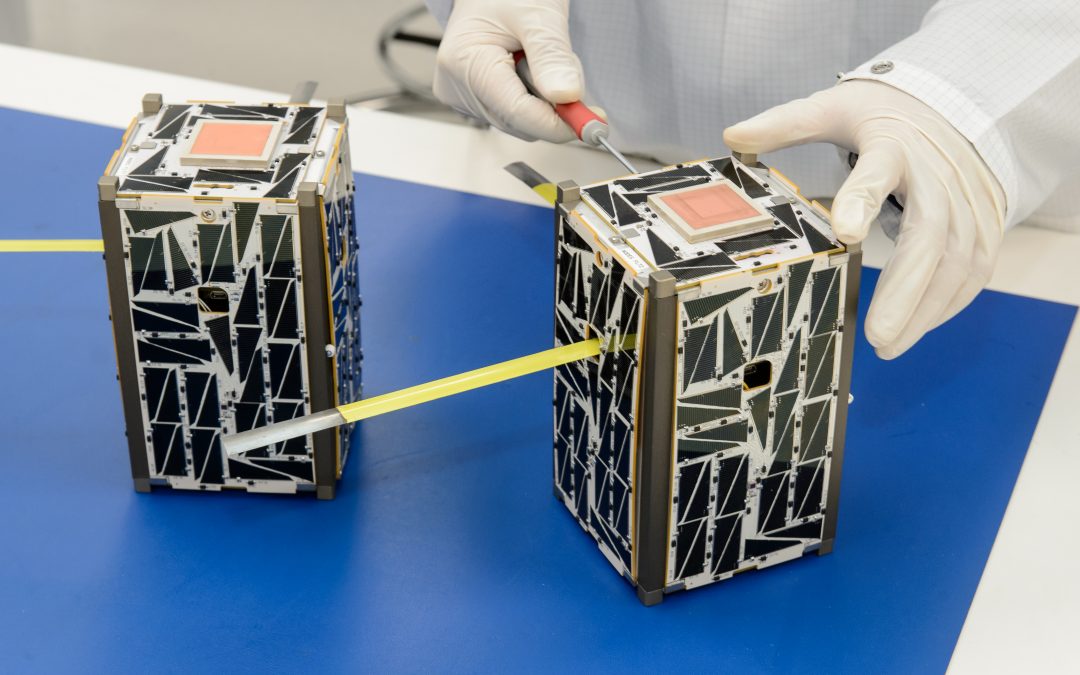
Above: CubeSats are a class of nanosatellites that use a standardized size and form factor. They were developed as a cost-effective platform for education and space exploration. Credit: NASA The Hawaiʻi Space Flight Laboratory (HSFL) has received a $450,000 grant for...